Wall Street: The Financial Capital of the World
📅 2026 Update: Recent Changes in the Stock Market Landscape
Since the original article was published, several important changes have affected how the stock market operates. New rules from the SEC aim to improve market quality, reduce costs, and enhance transparency. These updates are significant for investors, brokers, and anyone interested in the stock market.
The earlier article continues further down this page, providing foundational knowledge about the stock market and securities law.
📈 SEC Rule Amendments on Pricing and Fees
On September 18, 2024, the SEC made amendments to Regulation NMS. A $0.005 minimum pricing increment was introduced for certain stocks priced at or above $1.00 per share. This change aims to improve market quality and help lower transaction costs.
Additionally, access fee caps were lowered to $0.001 per share for protected quotations in these stocks.
🔍 New Requirements for Market Participants
On February 6, 2024, new rules were adopted that require significant liquidity-providing market participants to register as dealers. This move aims to increase market integrity and transparency. It affects how certain brokers and trading firms operate, ensuring they follow stricter rules.
💼 Rule 504 and Employee Benefit Plans
As of June 21, 2024, companies can offer and sell up to $10 million of securities in a 12-month period without SEC registration under Rule 504. They must file a notice with the SEC on Form D within 15 days of the first sale. Similarly, Rule 701 now allows companies to sell at least $1 million of securities to employees and consultants without registration, simplifying the process for businesses.
📊 Current Fees and Costs
The SEC's recent changes also affect how fees are structured. Balance transfer fees are now common on zero percent interest offers, and the median Balance Transfer APR for consumers with good credit is 15.99%. These changes highlight the ongoing evolution of costs associated with trading and investing.
📌 Key Points to Remember
- ⚖️ New SEC rules aim to improve market quality.
- 📈 Minimum pricing increments are now $0.005 for certain stocks.
- 🏦 Companies can raise up to $10 million without SEC registration under Rule 504.
- 🔍 Significant liquidity providers must now register as dealers.
- 💵 Balance transfer APRs average 15.99% for good credit.
💡 Tips for Navigating Recent Changes in the Stock Market
Consider discussing your specific situation with your attorney to understand how recent changes may affect you.
⚠️ Stay Updated on SEC Rules
Following the SEC's updates is crucial for investors. Understanding the new regulations can help you make more informed decisions in the stock market.
📄 File Form D Promptly
If you are a company utilizing Rule 504, remember to file Form D within 15 days after your first securities sale. Timely filing helps ensure compliance with SEC regulations.
💼 Monitor Access Fee Changes
Be aware of the reduced access fee caps. Knowing that fees are now capped at $0.001 can help you evaluate trading costs more effectively.
📊 Understand Employee Compensation Rules
If you work for a company that offers employee benefit plans, familiarize yourself with Rule 701. This exemption allows companies to sell securities directly to employees, providing potential benefits to you.
🏦 Evaluate Balance Transfer Offers Carefully
When considering balance transfer options, be cautious of fees and APRs. Understanding these terms can help you avoid unexpected costs.
📈 Assess Market Participant Registration
If you're involved in trading or providing liquidity, ensure you understand the new registration requirements for dealers. This will help you stay compliant with SEC rules.
🏆 Stock Trading Services Ranked by User Reviews (2026)
This section highlights various trading services and brokerages relevant to the stock market, based on user reviews. The order follows Trustpilot data from October 2026. Ratings can change over time, and they should be just one factor in your decision-making process.
🥇 1. Robinhood
Robinhood has a Trustpilot score of 4.0. The platform is known for its commission-free trading and a user-friendly mobile app. However, some reviewers mention occasional platform outages and limited customer support as drawbacks.
This service is particularly appealing for beginner investors looking to enter the stock market without high fees.
🥈 2. E*TRADE
E*TRADE holds a Trustpilot score of 1.0. It is recognized for online trading and investing with low commissions. However, many users report poor customer service and technical issues with the platform.
While E*TRADE is suitable for experienced traders, potential users should weigh these concerns against their trading needs.
🥉 3. Interactive Brokers
Interactive Brokers has a Trustpilot score of 3.0. It is known for offering low-cost access to a variety of financial instruments, including stocks, options, and futures. Despite its strengths, users have mixed feelings about customer service and find the platform complex for beginners.
Those looking for a comprehensive trading experience may find this platform useful.
🆓 Free Resources for Investors
The Securities and Exchange Commission (SEC) and the Consumer Financial Protection Bureau (CFPB) provide valuable information on securities laws and credit card terms. These resources can help investors understand their rights and obligations in the stock market.
🔎 What to Compare When Choosing a Trading Service
- 📊 User reviews and ratings
- 💼 Fees and commission structures
- 🔍 Customer service quality
- ⚙️ Platform usability for beginners
- 🌐 Available investment options
❓ Frequently Asked Questions
❓ What is the purpose of the SEC's new pricing rules?
The SEC's new pricing rules aim to enhance market quality and reduce transaction costs for investors by establishing a minimum pricing increment.
💵 How do balance transfer fees work?
Balance transfer fees are typically a percentage of the amount transferred and can affect the overall cost of using a zero percent interest credit offer.
📆 What is the filing deadline for Form D under Rule 504?
Companies must file Form D within 15 days of the first sale of securities in a Rule 504 offering to ensure compliance with SEC rules.
💼 What are the eligibility criteria for Rule 504?
Certain companies, like Exchange Act reporting companies and investment companies, are not eligible to use Rule 504 for raising funds.
⚖️ How does Rule 701 benefit employees?
Rule 701 allows companies to sell securities to employees and consultants without SEC registration, providing potential financial benefits to recipients.
📈 Why is it important to monitor SEC updates?
Staying informed about SEC updates is crucial for investors to make well-informed decisions and comply with current regulations in the stock market.
⚖️ Recent Cases Related to Stock Market Regulations
Recently, several court rulings have addressed issues related to securities laws and investor protections. These rulings connect to the broader themes of market integrity and compliance with SEC regulations.
- Delaware Court Rules on Securities Fraud Claims in CaseSuperior Court of Delaware · June 22, 2026
- Court rules on hotel investment fraud case in North CarolinaNorth Carolina Business Court · June 25, 2026
- Delaware Court Dismisses Shareholder Lawsuit Against AlconCourt of Chancery of Delaware · June 26, 2026
- Texas court rules contract for lots unenforceable due to fraudTexas Business Court · July 29, 2026
For more information on recent rulings, visit the news section for more rulings on the news page.
End of October 2026 Update
What is Wall Street?
In a broad sense, Wall Street is the colloquial term for the financial district of New York City. Specifically, the name refers to the street running from Broadway to South Street on the East river. Over time, the name has become a metonym, which signifies the financial interests and activities of the nation.
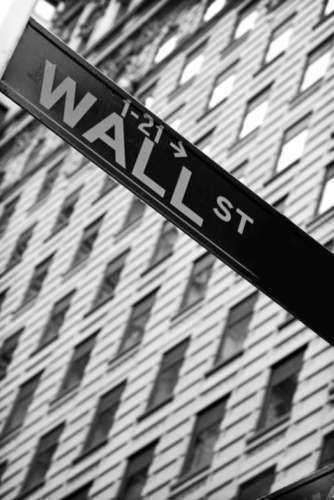
Wall Street is the permanent home of the New York Stock Exchange—the world’s largest stock market by market capitalization of its listed companies.
In addition to the New York Stock Exchange, other markets have headquarters on Wall Street and the greater financial district, including the AMEX, NYMEX, NYBOT, and NASDAQ.
History of Wall Street
In 1626, the lower portion of Manhattan was the first area in New York to be settled by Europeans. Although there are differing accounts as to how the street got its name, the generally accepted theory derives from the presence of an earthen wall laid on the northern boundary of the New Amsterdam settlement. Regardless of the etymology, the street, because of its port location, became a hub for commerce and trade.
In 1792, the marketplace formalized through the associated of the Buttonwood Agreement, which loosely established the basis of the New York Stock Exchange. The Buttonwood Agreement created a structured marketplace though the regulation of manipulative auctions; all persons signing the act agreed to charge a standard commission rate for each transaction, those who refused to sign could still participate but would be charged a higher commission for transacting in the marketplace.
In 1789, Wall Street was the location of the first US presidential inauguration, when George Washington took the oath of office on the balcony of Federal Hall on April 30, 1789.
In the Nineteenth century Wall Street, with the opening of the Erie Canal in the early 1800s, became a booming port for business. During this century--because of the infiltration of businesses--the majority of residents moved north to midtown.
In 1884, Charles Dow began tracking 11 stocks (mostly railroads), and calculated the average prices for the bundle. When the average prices consistently rose, he deemed it a bull market condition; in contrast, if the averages plummeted, it was a bear market. Dow accomplished this calculation by adding up the prices and dividing the number of stocks—referred to as the Dow Jones average.
During the 20th century, business on Wall Street initially boomed. Major Banks, such as J.P. Morgan established headquarters on Wall Street and the stock market expanded to a fully-functional stock market. During this era, the corporate culture of New York developed into the world’s primary center for the construction of skyscrapers.
As the nation grew and finance became the foundation of New York City a growing number of Americans began investing in the stock market. Although a novel idea, the prosperity of the times and the evolution of the market gave way to the great depression.
Currently, Wall Street is still home to the aforementioned markets and is still considered the hub for financial transactions in the United States.